

Omega-3 for dogs: the "calm the itch" fatty acid
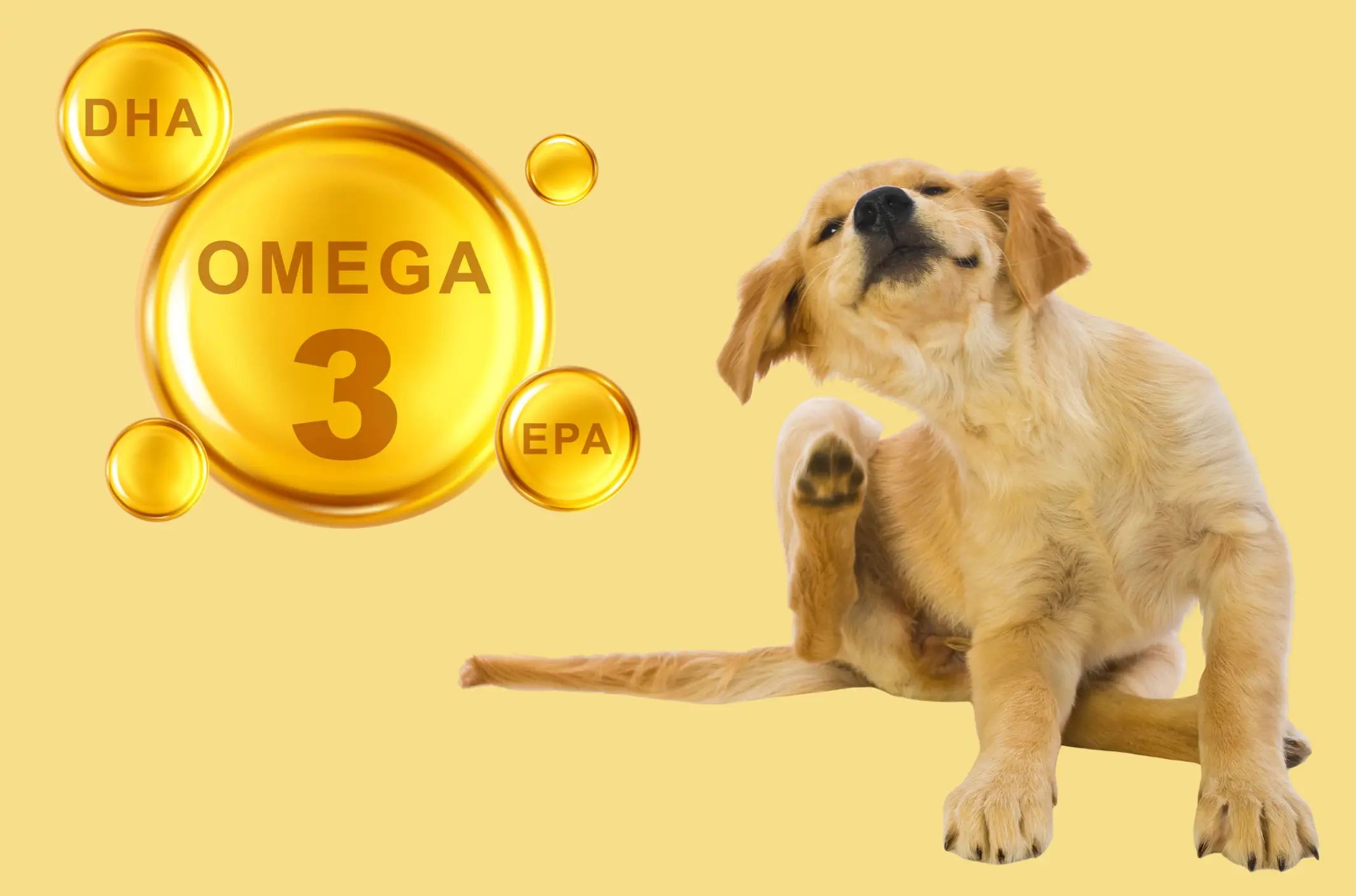
Omega-3s are popular because they help the body manage inflammation. In practice, this is why vets often talk about Omega-3s for dogs with allergies, itchy skin, or dermatitis.
The Omega-3s that matter the most (EPA + DHA)
You'll see three common omega-3 terms:
- ALA (alpha-linolenic acid): found in plants (flax, chia)
- EPA + DHA: Found mainly in marine sources (fish oils)
Why it matters:
Dogs do not reliably convert plant-based ALA into EPA/DHA at meaningful levels, especially DHA, so if you're aiming for skin calming, inflammation-supporting effects, EPA + DHA sources usually outperform ALA-only sources.
Best Omega-3 Sources
- Fatty fish (sardines, mackerel, salmon)
- Fish oil (look for EPA/DHA amounts per serving)
- Algae-based Omega-3 (an alternate source for DHA/EPA in some products)
- Flax/Chia (ALA, helpful but not equal to EPA/DHA)
Marine sources provide EPA and DHA, the most effective omega-3s for dogs
Omega-6 for dogs: the "skin barrier" builder
Omega-6 fatty acids (especially linoleic acid) are essential for dogs and play a key role in skin and coat health, particularly in supporting the skin barrier function.
A strong barrier is underrated but helps:
- Reduce dryness (less moisture escaping from the skin)
- Improve coat feel and resilience
- Lower the "easy entry" points for irritants in allergy-prone dogs (in combination with other care)
Common Omega-6 Sources
- Hemp seed oil
- Sunflower oil
- Safflower oil
- Soybean oil
- Chicken fat / animal fats
- Eggs
The contrarian truth: Omega-6 is rarely the thing you're missing
Many commercial diets already contain plenty of Omega-6 (from poultry fat and vegetable oils). The problem is often too much Omega-6 relative to Omega-3, not a lack of Omega-6. This is why adding another Omega-6 oil sometimes does nothing.
AAFCO has referenced a max Omega-6:Omega-3 ratio of 30:1 as a safe limit.
Omega-9 for dogs: helpful, but not essential
Omega-9 (oleic acid) are not essential for dogs because dogs can synthesize them. They can still be part of a healthy fat profile, but Omega-9 is rarely the lever you pull for itchy skin or coat shine compared with balancing Omega-6 and Omega-3.
Omega-9 Sources
- Olive oil
- Hemp seed oil
- Chicken fat
Omega-3 vs Omega-6 vs Omega-9: a simple comparison
| Omega Type | Essential for Dogs? | Best Known For | Practical Note |
|---|---|---|---|
| Omega-3 (EPA/DHA) | Yes | Inflammation support, often used for itchy/allergy-prone | Marine (EPA/DHA) usually beats plant ALA for results |
| Omega-6 (LA) | Yes | Skin barrier function, coat quality | Often already high in many diets; balance matters |
| Omega-9 | No | General fat profile support | Dogs can synthesize on their own; not the priority lever |
A fun way to add skin support: Skin & Coat Health Booster treat
Not every dog wants to be part of your "wellness protocol." But almost every dog wants a treat.
Skin & Coat Health Booster
If you want a simple, tail-wagging way to support skin and coat health, Skin & Coat Health Booster is a functional treat made with sweet potato, chicken liver powder, egg, spinach, hemp seed oil, fish oil, vegetable oil, and chickpea flour.
The best part? You can make it part of your dog's happiest moments:
- The "good dog" reward after walks
- A training treat (high motivation, low drama)
- A tiny ritual after grooming days
It's an easy way to keep skin-supportive fats in the routine—without the daily measuring, dripping, and negotiating that sometimes comes with oils.
If your dog has a sensitive stomach, introduce any new treat gradually—see side effects below.
Side effects of omega oils (and how to avoid them)
At recommended amounts, most dogs do well with omega additions—especially when introduced slowly. But side effects can happen, particularly with fish oil.
Common mild side effects:
- Fishy odor/breath
- Oily coat
- Mild GI upset (soft stools, gassiness, occasional vomiting)
How to minimize side effects:
- Start with a small amount and gradually increase over 7-10 days
- Give with food to reduce stomach upset
- Store oils properly (refrigerate after opening, check expiration dates)
- If symptoms persist, reduce dose or consult your vet
How to choose an omega product (without getting fooled by marketing)
A few label-reading tips that save money and frustration:
- Don't obsess over "Omega-3" as a headline: Look for EPA and DHA specifically if your goal is itchy/allergy-prone skin support.
- Watch the omega-6 pile-on: Many diets already have plenty of omega-6. Adding more omega-6 without omega-3 often won't move the needle.
- Consistency beats intensity: A modest amount given consistently (and tolerated well) often beats sporadic high dosing that causes GI drama.
- Check for third-party testing: Look for products tested for purity and freshness (especially important for fish oils).
- Consider the form: Liquid oils, soft gels, or treats—choose what your dog will actually consume consistently.